
Artifacts
Korean national treasures and cultural heritage — 47 items
 #2🏯 Architecture
Ten-story Stone Pagoda of Wongaksa Temple Site
국보 제2호
A highly decorative marble pagoda built during the Joseon Dynasty in 1467. It features intricate carvings of dragons, lions, lotus flowers, and Buddhas on each level. The pagoda is unique for its use of marble instead of the more common granite found in Korean stone structures.
 #4🏯 Architecture
Stupa of Godalsa Temple Site
국보 제4호
An exquisite granite stupa representing the height of stone carving art during the Goryeo Dynasty. It is believed to have been built for a high-ranking Buddhist monk and features detailed carvings of dragons and clouds. The structure is remarkably well-preserved and displays a harmonious octagonal design.
 #5🗿 Sculpture
Twin-Lion Stone Lantern of Beopjusa Temple
국보 제5호
A unique stone lantern from the Unified Silla period featuring two carved lions standing on their hind legs to support the lamp chamber. It is considered a masterpiece of Silla sculpture for its dynamic posture and balanced proportions. The lantern symbolizes the light of Buddhist wisdom illuminating the world.
 #6🏯 Architecture
Seven-story Stone Pagoda in Tappyeong-ri, Chungju
국보 제6호
Commonly known as the 'Jungangtap' or Central Pagoda because it was located at the geographical center of the Unified Silla Kingdom. It is the tallest stone pagoda from the Silla period and is noted for its simple yet powerful proportions. Relics were found inside the pagoda during a restoration process in 1917.
 #8🏯 Architecture
Muryangsujeon Hall of Buseoksa Temple
국보 제8호
One of the oldest surviving wooden buildings in South Korea, serving as the main hall of Buseoksa Temple. It is famous for its 'baehullim' pillars, which are slightly tapered to create an optical illusion of perfect straightness. The hall houses a clay seated statue of Amitabha Buddha and represents the peak of Goryeo wooden architecture.
 #9🏯 Architecture
Five-story Stone Pagoda of Jeongrimsa Temple Site
국보 제9호
A majestic stone pagoda from the Baekje Dynasty that stands as a testament to the refined architectural style of the period. It is characterized by its thin, wide roof stones and graceful proportions that mimic the aesthetics of wooden pagodas. The structure survived the fall of the Baekje Kingdom and remains a symbol of Buyeo.
 #10🏯 Architecture
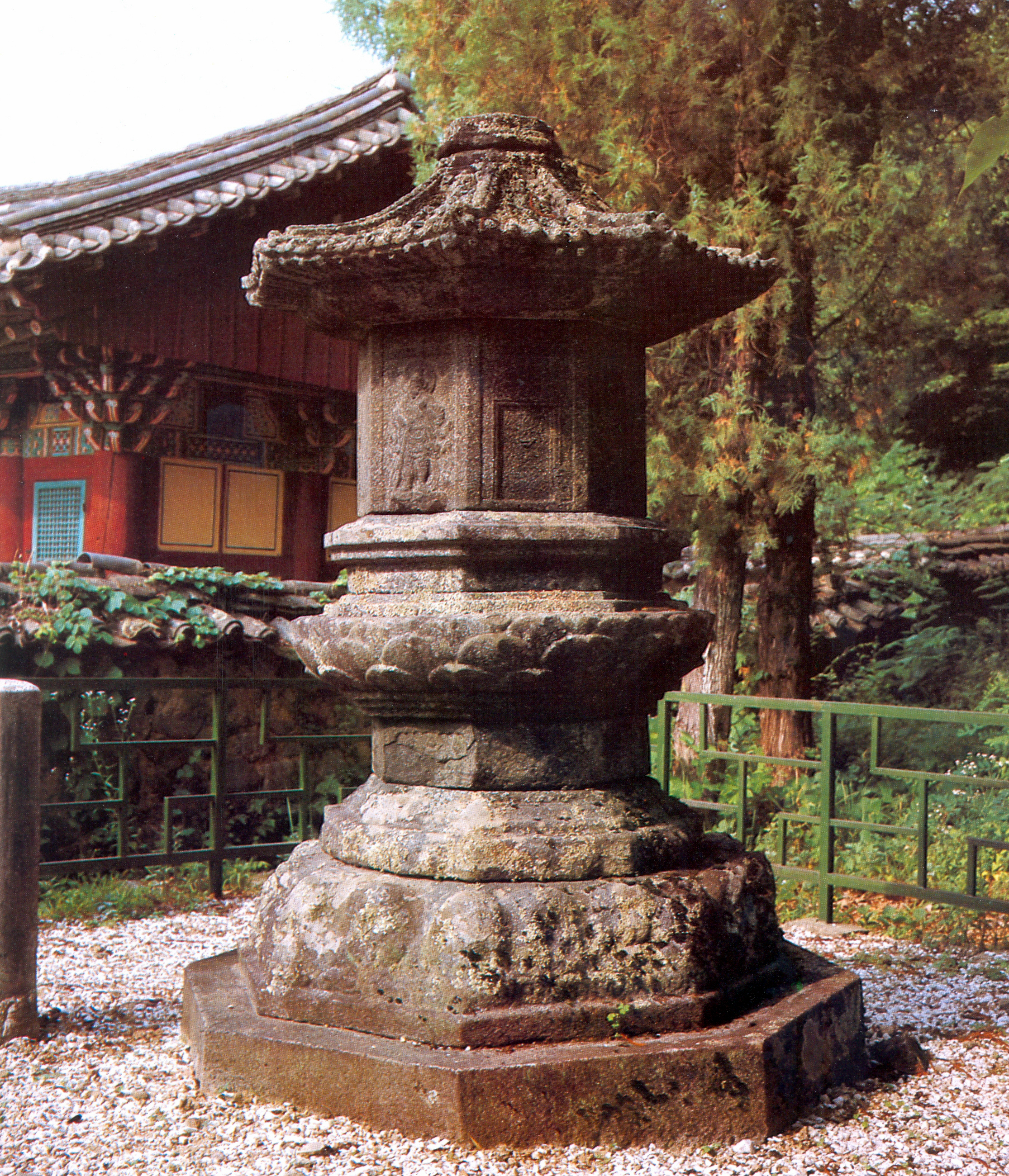
Stupa of Buddhist Monk Sucheol at Silsangsa Temple
국보 제10호
An octagonal stone stupa built to house the remains of Monk Sucheol, a prominent figure in the Silsangsa sect. It features delicate carvings of doors and guardians on the body stone, typical of the late Unified Silla style. The stupa is highly regarded for its balanced structural integrity and artistic detail.
 #11📜 Book
Tripitaka Koreana Woodblocks
국보 제11호
A complete collection of Buddhist scriptures carved onto over 80,000 woodblocks during the 13th century. It is the world's most comprehensive and oldest intact version of the Buddhist canon in Hanja. The woodblocks were created as a prayer for divine protection against Mongol invasions and are preserved at Haeinsa Temple.
 #13🏯 Architecture
Stone Pagoda of Mireuksa Temple Site
국보 제13호
The largest and oldest stone pagoda in Korea, representing the transition from wooden to stone architectural styles in the Baekje Kingdom. It was originally part of a massive temple complex founded by King Mu. Recent excavations and restoration efforts revealed a gold sarira reliquary inside, providing key historical insights.
 #14🏯 Architecture
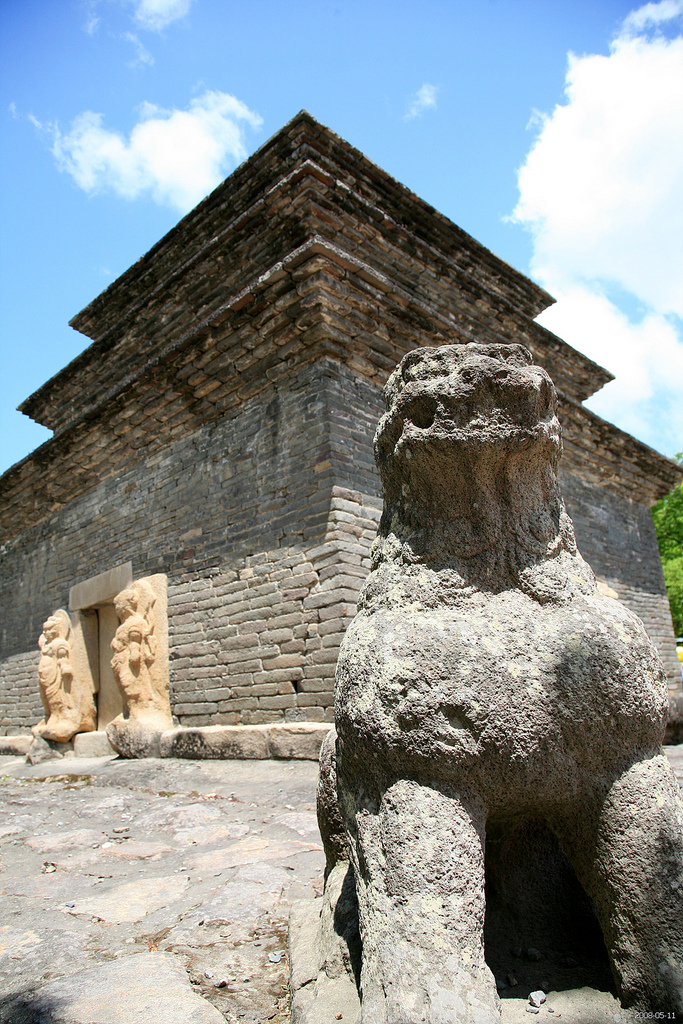
Stone Pagoda of Bunhwangsa Temple
국보 제14호
A unique Silla-era pagoda built using stones carved to look like bricks, a style known as 'mojeon'. It originally had more stories, but only three levels remain today, guarded by stone lions at the corners. It is the oldest dated pagoda from the Silla Kingdom and reflects the influence of Tang Dynasty brick pagodas.
 #16🏯 Architecture
Janggyeong Panjeon (Storage Halls for the Tripitaka Koreana)
국보 제16호
A set of four buildings at Haeinsa Temple specifically designed to preserve the Tripitaka Koreana woodblocks. The architecture utilizes natural ventilation and temperature control techniques that have kept the woodblocks from decaying for centuries. It is recognized as a UNESCO World Heritage site for its innovative scientific design.
 #17✍️ Calligraphy
Stele Commemorating the Border Inspection by King Jinheung in Changnyeong
국보 제17호
One of the four major boundary monuments erected by King Jinheung of Silla to celebrate his conquest of the Gaya confederacy. The inscription records the names of high-ranking officials who accompanied the King, providing valuable data on the Silla social hierarchy. It is a crucial primary source for 6th-century Korean history.
 #19🏯 Architecture
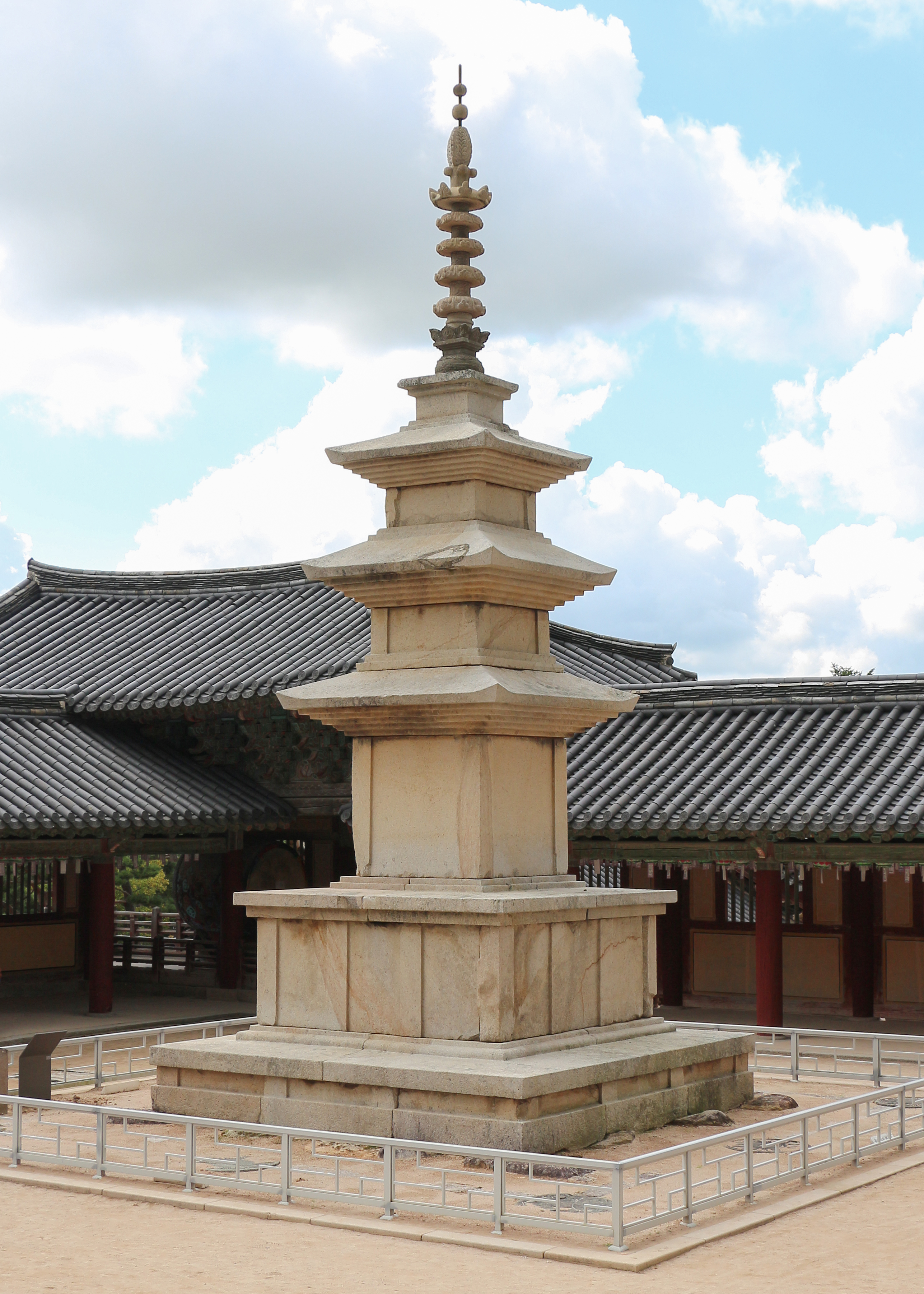
Three-story Stone Pagoda of Bulguksa Temple (Seokgatap)
국보 제19호
A classic three-story pagoda that epitomizes the refined and balanced aesthetic of Unified Silla stone architecture. During a 1966 restoration, the Mugujeonggwang Daedaranigyeong, the world's oldest printed text, was found inside. It is often paired with Dabotap to represent the dual nature of the Buddha.
 #20🗿 Sculpture
Gilt-bronze Seated Vairocana Buddha of Bulguksa Temple
국보 제20호
A magnificent Buddhist statue representing the Cosmic Buddha, characterized by the 'Vajra Mudra' hand gesture symbolizing wisdom. The statue is praised for its realistic proportions and the serene, majestic expression on its face. It is a prime example of the high level of metalwork achieved during the Unified Silla period.
 #21🗿 Sculpture
Gilt-bronze Seated Amitabha Buddha of Bulguksa Temple
국보 제21호
A seated figure of the Buddha of Infinite Light, located in the Geuknakjeon Hall of Bulguksa Temple. The statue exhibits the sophisticated casting techniques and artistic elegance of the 8th-century Unified Silla. It is one of the three major gilt-bronze Buddhas from the Silla period along with the Vairocana statue.
 #23🏯 Architecture
Cheongungyo and Baegungyo Bridges of Bulguksa Temple
국보 제23호
The Blue Cloud and White Cloud Bridges are grand stone staircases that serve as the main entrance to the temple's central courtyard. They represent the transition from the mundane world to the spiritual world of Buddha. The arched underside of the bridges is a pioneering example of stone arch construction in Korea.
 #24🗿 Sculpture
Seokguram Grotto
국보 제24호
An artificial stone grotto constructed on Mt. Tohamsan, housing a monumental granite Buddha looking out toward the East Sea. It is surrounded by detailed reliefs of disciples, bodhisattvas, and guardian deities. The engineering of the dome and the artistic perfection of the main Buddha make it a world-renowned masterpiece of Buddhist art.
 #25🏯 Architecture
Stele for King Taejong Muyeol of Silla
국보 제25호
The remaining stone base and capstone of a monument dedicated to King Taejong Muyeol, the ruler who laid the foundation for the unification of the Three Kingdoms. The tortoise base and the dragon-carved capstone are masterfully executed. It is a significant artifact for understanding Silla funerary monuments and decorative arts.
 #29🏺 Craft
Divine Bell of King Seongdeok (Emille Bell)
국보 제29호
The largest and most famous bronze bell in Korea, known for its deep, echoing sound and the legend of 'Emille.' It is decorated with exquisite carvings of celestial maidens (apsaras) and lotus patterns. The bell represents the pinnacle of bronze casting technology in the Unified Silla period.
 #31📜 Book
Hunminjeongeum Haerye (The Manuscript Edition)
국보 제31호
A manual explaining the principles and usage of Hangeul, the Korean alphabet, promulgated by King Sejong the Great in 1446. It is the only writing system in the world with a known inventor and recorded explanation of its phonetic principles. This document is a cornerstone of Korean cultural identity and linguistic history.
 #34🔮 Other
Honcheonsigye (Armillary Clock)
국보 제34호
An astronomical clock that combines a celestial globe (honcheon-ui) with a mechanical clock mechanism. Built in 1669, it was used to track the movements of celestial bodies and tell the time simultaneously. It is a rare surviving example of a complex scientific instrument from the mid-Joseon period.
 #35🏺 Craft
Celadon Prunus Vase with Inlaid Crane and Cloud Design
국보 제35호
An iconic example of Goryeo celadon, featuring the unique 'sanggam' inlay technique to depict cranes flying among clouds. The vase has a voluminous upper body and a narrow base, typical of the 'maebyeong' style. The jade-green glaze and delicate inlay represent the peak of Goryeo ceramic art.
 #78🏺 Craft
Great Gilt-bronze Incense Burner of Baekje
국보 제78호
A stunning artifact discovered in a temple site in Buyeo, representing the spiritual worldview of the Baekje people. The burner features a phoenix on top, a mountain peak with various musicians and animals, and a dragon supporting the base. It is considered one of the most beautiful and complex metalcrafts in Asian history.
 #83🗿 Sculpture
Gilt-bronze Pensive Bodhisattva
국보 제83호
A world-famous Buddhist statue depicting Maitreya in a pensive pose, with one leg crossed over the other and a finger lightly touching the cheek. The statue is praised for its elegant curves, thin drapery, and a subtle, mysterious smile. It represents the height of Buddhist sculpture in the 7th-century Three Kingdoms period.
 #287🏺 Craft
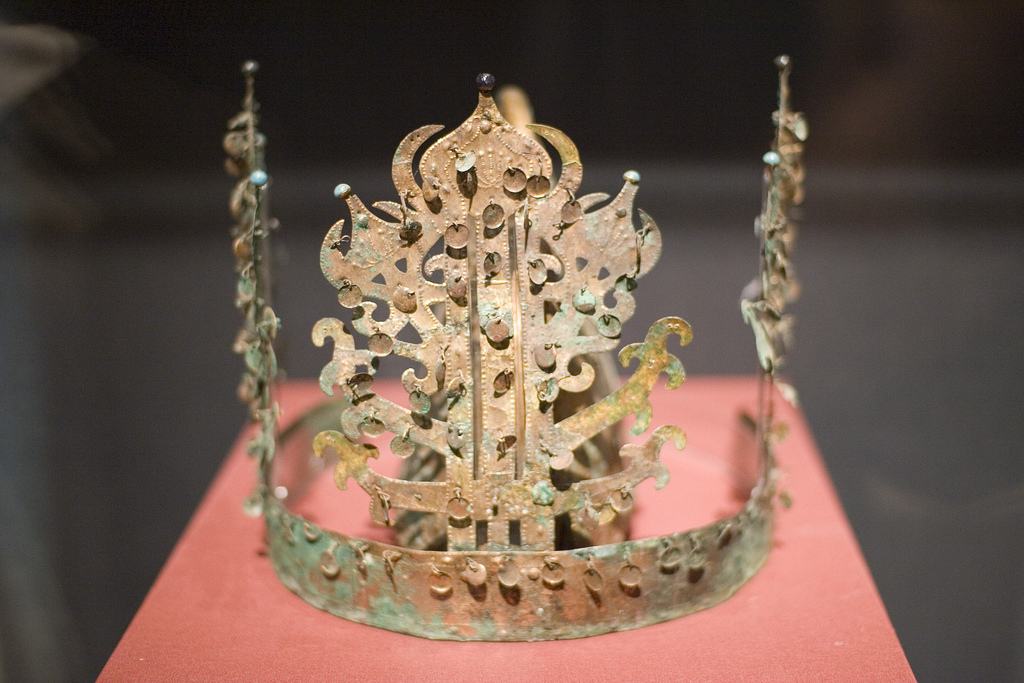
Gold Crown Ornaments of the Queen of King Muryeong
국보 제287호
A pair of gold ornaments discovered near the head of the queen in King Muryeong's tomb. They feature a symmetrical design of flowers and vines, distinct from the flame-like ornaments of the king. These artifacts are essential for studying Baekje royal funeral customs and jewelry design.
 #1🏺 Craft
Bronze Bell of Heungcheonsa Temple
보물 제1호
A large bronze bell cast during the early Joseon Dynasty in 1462. It was originally housed in Heungcheonsa Temple and is notable for its intricate patterns and inscriptions in both Hanja and Sanskrit. The bell serves as a key example of the transition in bell-casting styles from the Goryeo to the Joseon period.
 #2🏺 Craft
Bronze Bell of Bosingak Pavilion
보물 제2호
The original bell that was used at Bosingak Pavilion to signal the opening and closing of the city gates of Seoul. Cast in 1468, it was rung 28 times in the morning and 33 times in the evening. It is currently preserved in the National Museum of Korea to protect it from further damage.
 #20🏯 Architecture
Josadang Hall of Shilleoksa Temple
보물 제20호
A small wooden building at Shilleoksa Temple dedicated to the memory of prominent Buddhist monks. It features a unique roof style and well-preserved wooden brackets characteristic of the early Joseon period. Shilleoksa is notable for being one of the few Korean temples located directly on a riverside.
 #1🏯 Architecture
Heunginjimun Gate (Dongdaemun)
국보 제1호
The Great East Gate of Seoul, one of the eight gates of the Joseon-era city walls surrounding Hanyang. Originally built in 1396 during the reign of King Taejo and rebuilt in 1869, it is the only city gate with a semi-circular defensive barbican. It is officially designated as National Treasure No. 1 of South Korea.
 #712📜 Book
Hunminjeongeum Eonhae (The Vernacular Edition)
보물 제712호
A version of the Hunminjeongeum where the original Chinese text was translated into the Korean script, Hangeul. This edition helped the common people understand the new writing system more easily. It is an invaluable resource for studying the early history of the Korean language and the propagation of Hangeul.
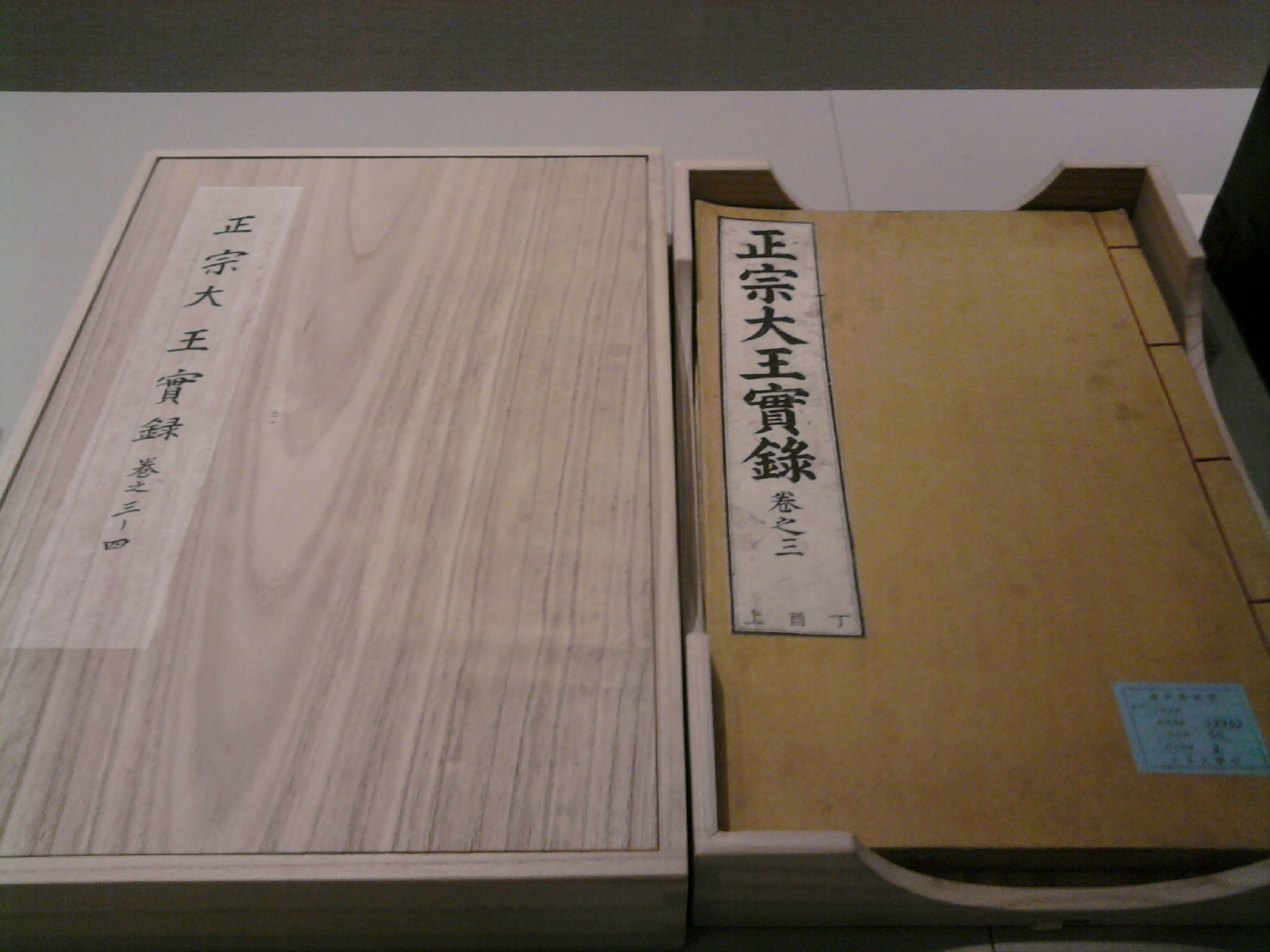 #745📜 Book
Veritable Records of the Joseon Dynasty (Jeongjoksan Edition)
보물 제745호
The daily records of the kings of the Joseon Dynasty, maintained for over 470 years. The Jeongjoksan version is one of the major surviving sets that was kept in a mountain archive to ensure its safety from war. It is recognized by UNESCO for its incredible detail and objectivity in recording national history.
 #782🏯 Architecture
Geunjeongjeon Hall of Gyeongbokgung Palace
보물 제782호
The throne hall and main building of Gyeongbokgung, the primary palace of the Joseon Dynasty. It was used for major state ceremonies, including royal coronations and receiving foreign envoys. The hall is elevated on a double-tiered stone platform and is the largest wooden structure of its kind in Korea.
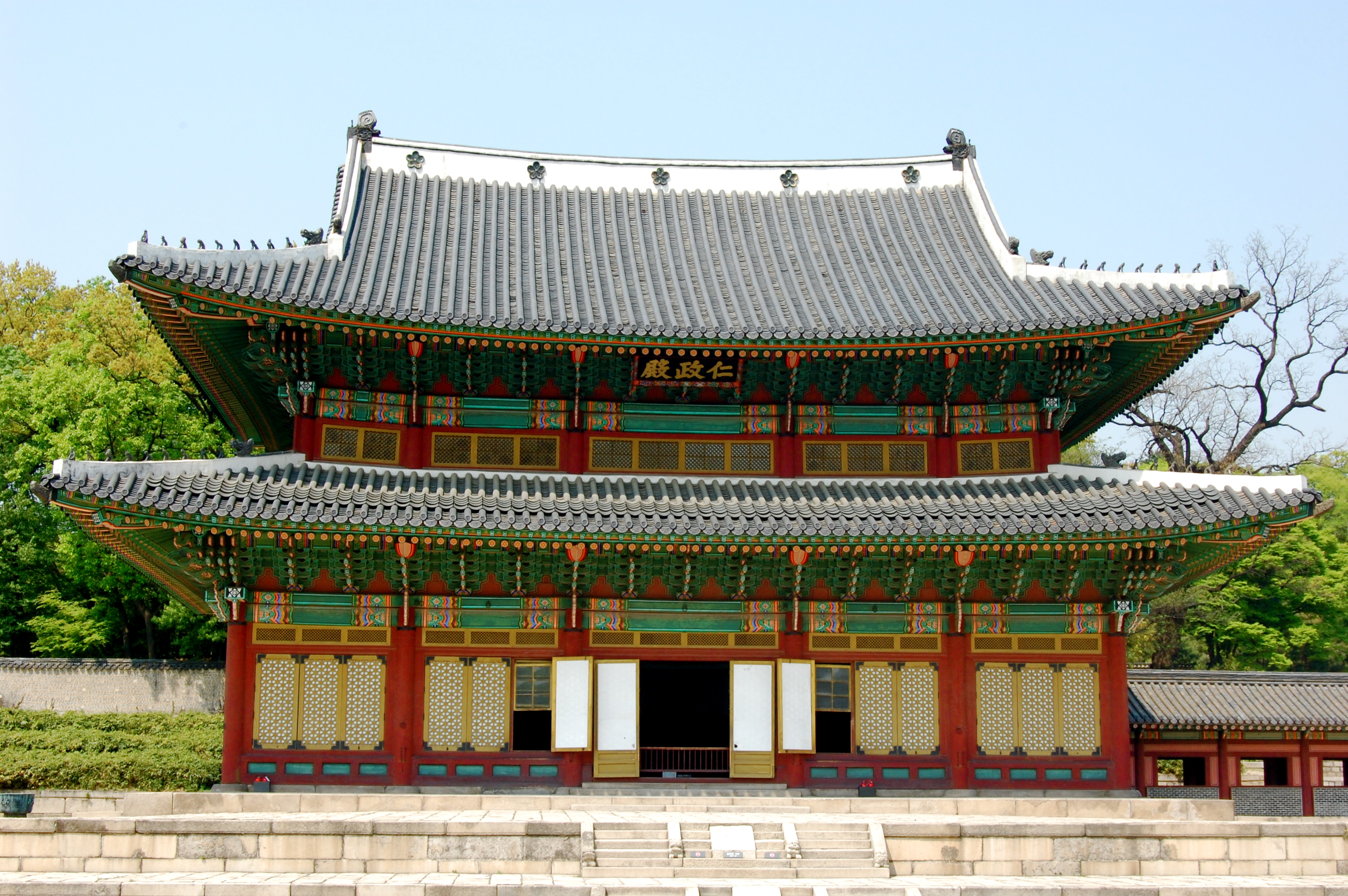 #811🏯 Architecture
Injeongjeon Hall of Changdeokgung Palace
보물 제811호
The main throne hall of Changdeokgung, where kings conducted state affairs and held official ceremonies. Unlike the more formal Gyeongbokgung, this palace was built to harmonize with the natural topography of the site. The hall's interior features a mixture of traditional Joseon design and early 20th-century Western influences like chandeliers.
 #812🏯 Architecture
Injeongmun Gate of Changdeokgung Palace
보물 제812호
The main gate leading into the courtyard of the Injeongjeon throne hall. It served as the site for several royal coronations when the main hall was not yet ready for the ceremony. The gate's design is simple yet dignified, reflecting the royal authority of the Joseon Dynasty.
 #813🏯 Architecture
Donhwamun Gate of Changdeokgung Palace
보물 제813호
The main entrance gate of Changdeokgung Palace, originally built in 1412. It is a two-story structure and is one of the oldest surviving main palace gates in Seoul. The name 'Donhwamun' signifies the king's desire to rule with great virtue and benevolence.
 #1985🏺 Craft
Mother-of-pearl Inlaid Case with Chrysanthemum and Vine Design
보물 제1985호
A refined example of Goryeo lacquerware decorated with delicate mother-of-pearl inlays. The case features a dense pattern of chrysanthemum flowers and scrolling vines, a hallmark of Goryeo luxury crafts. Such items were highly prized throughout East Asia for their shimmering beauty and precise execution.
 #3✍️ Calligraphy
Stele Marking the Inspection of Bukhansan by King Jinheung
국보 제3호
A stone monument erected by King Jinheung of the Silla Kingdom to commemorate his inspection of the new borders. It was discovered on Mt. Bukhansan and provides critical historical evidence of Silla's territorial expansion in the 6th century. The calligraphy on the stone is highly valued for its historical and artistic significance.
 #7🏯 Architecture
Stele of Bongseon Honggyeongsa Temple
국보 제7호
A stone monument erected in 1026 to celebrate the establishment of the Honggyeongsa Temple and a nearby lodging for travelers. The base is carved in the shape of a tortoise, and the capstone features a dragon design. It is a significant artifact for studying Goryeo Dynasty calligraphy and stone sculpture.
 #12🏯 Architecture
Cheomseongdae Observatory
국보 제12호
The oldest surviving astronomical observatory in East Asia, built during the reign of Queen Seondeok of Silla. Its bottle-shaped structure consists of 365 stones, symbolizing the days of the year, and was used to observe the stars for agricultural and divinatory purposes. It is a masterpiece of Silla engineering and scientific thought.
#32📜 BookTripitaka Koreana (Complete Woodblock Set)
국보 제32호
The comprehensive collection of 81,258 woodblocks used for printing the Buddhist Tripitaka. This specific designation refers to the entire set of blocks kept at Haeinsa Temple, reflecting Goryeo's Buddhist devotion. It is globally recognized for its textual accuracy and the longevity of the wood used.
 #33🔮 Other
Jagyeongnu (Water Clock) of Changgyeonggung Palace
국보 제33호
A sophisticated self-striking water clock developed during the Joseon Dynasty to provide precise time for the royal court. It consists of three water containers and two receivers, using a mechanism of metal balls to strike bells and drums. It highlights the scientific and mechanical advancement of the 15th-century Joseon period.
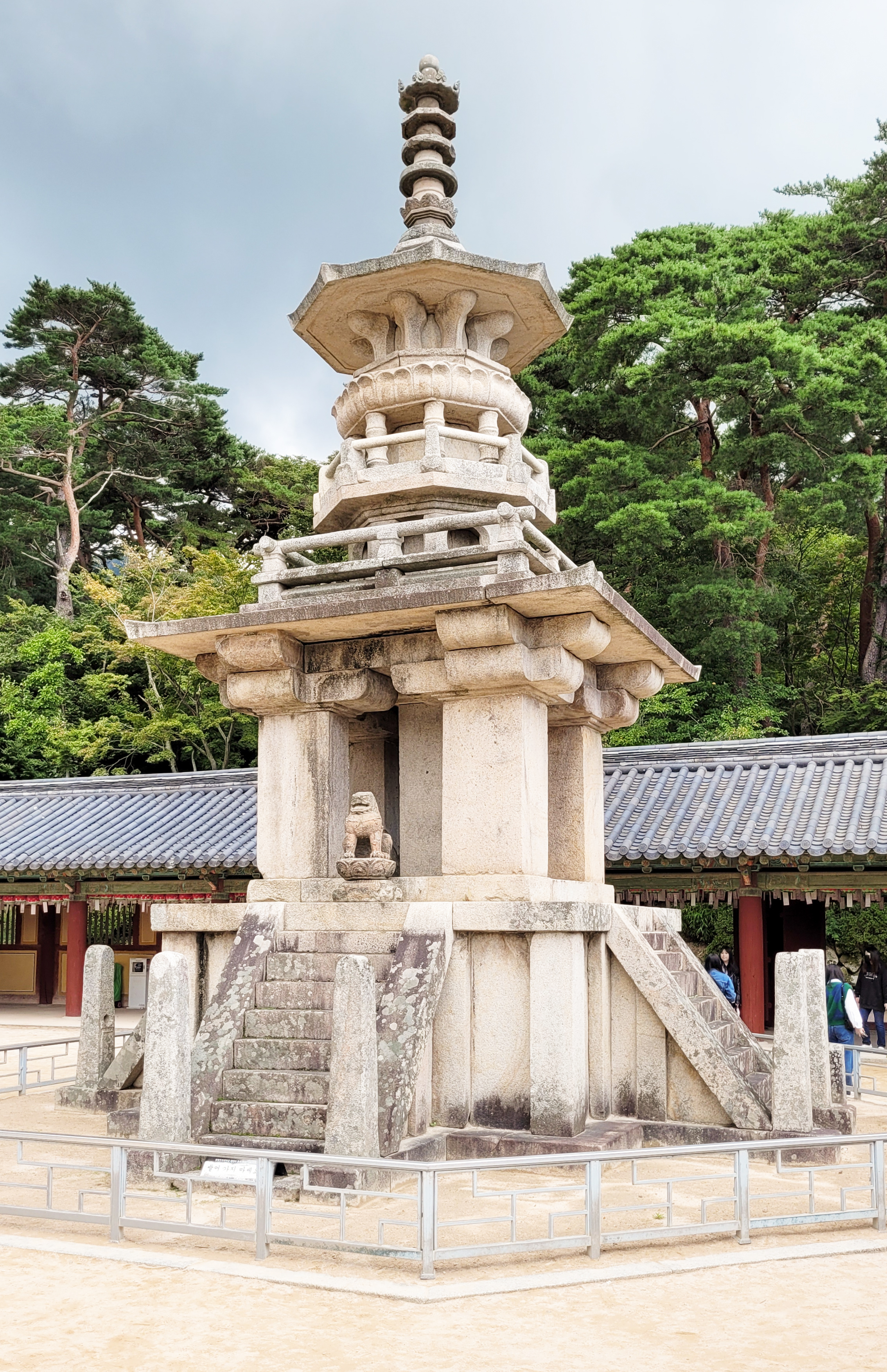 #18🏯 Architecture
Dabotap Pagoda of Bulguksa Temple
국보 제18호
The Pagoda of Many Treasures, located at Bulguksa Temple, is famous for its highly ornate and complex design. Unlike typical stone pagodas, it uses elaborate carvings that resemble wooden joinery. It stands in contrast to the simpler Seokgatap across the courtyard, representing the diversity of Buddhist architecture.
 #22🏯 Architecture
Yeonhwagyo and Chilbogyo Bridges of Bulguksa Temple
국보 제22호
A pair of stone stair-bridges leading to the Geuknakjeon (Hall of Supreme Bliss) at Bulguksa Temple. Yeonhwagyo is decorated with lotus flower petals on each step, symbolizing the path to the Pure Land. These structures are rare examples of Silla-era bridge architecture and showcase intricate stone masonry.
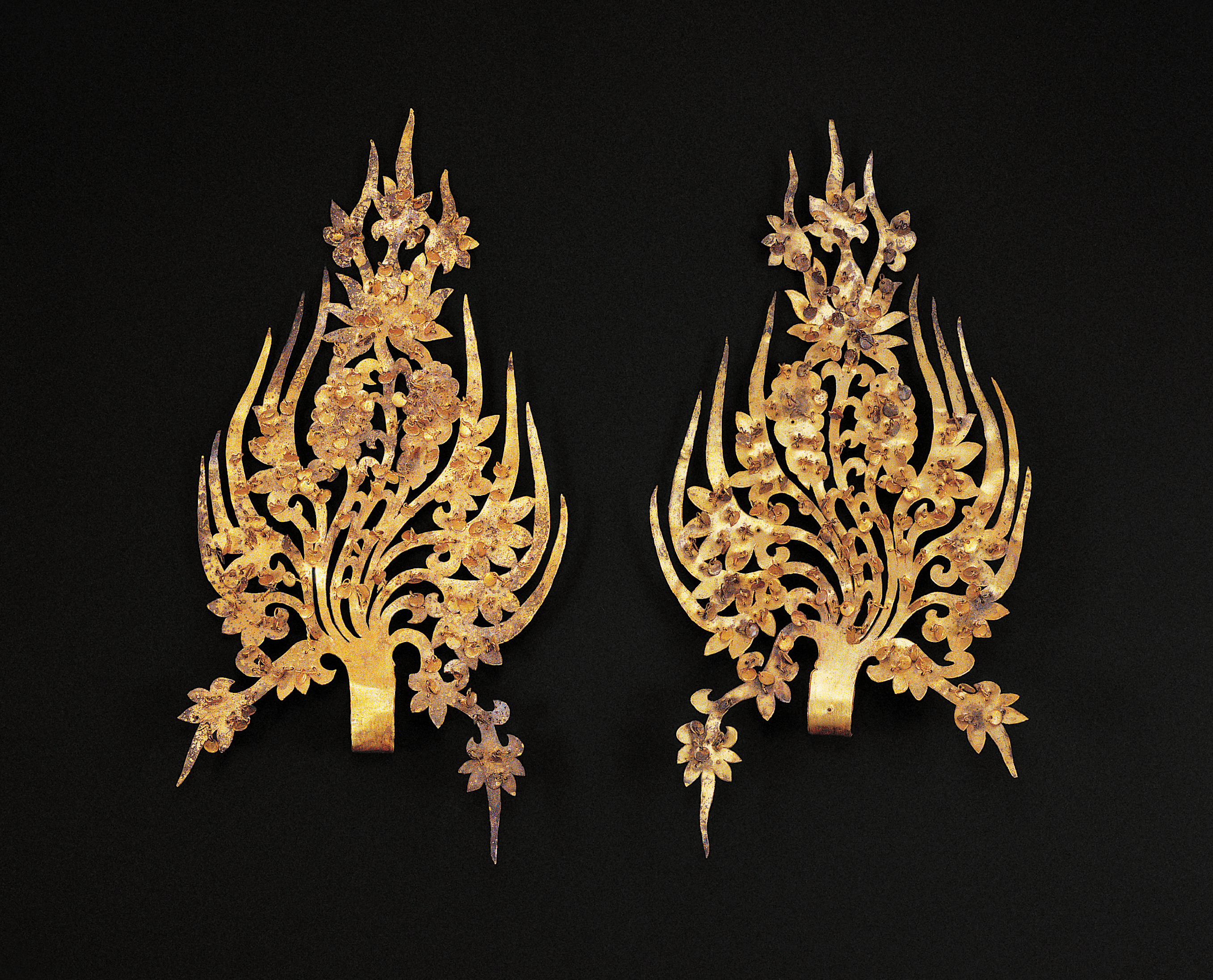 #285🏺 Craft
Gold Crown Ornaments of King Muryeong
국보 제285호
Exquisite gold ornaments found in the tomb of King Muryeong of Baekje, intended to be attached to the royal crown. They feature flame-like patterns and floral motifs, shimmering with dozens of small gold spangles. These ornaments demonstrate the wealth and sophisticated craftsmanship of the Baekje royal court.
 #537📜 Book
Donguibogam (Principles and Practice of Eastern Medicine)
보물 제537호
An encyclopedic medical book compiled by the royal physician Heo Jun in 1613. It covers a vast range of medical knowledge, including internal medicine, surgery, and acupuncture. This specific edition is printed using wooden movable type, representing a milestone in both medical history and printing technology.
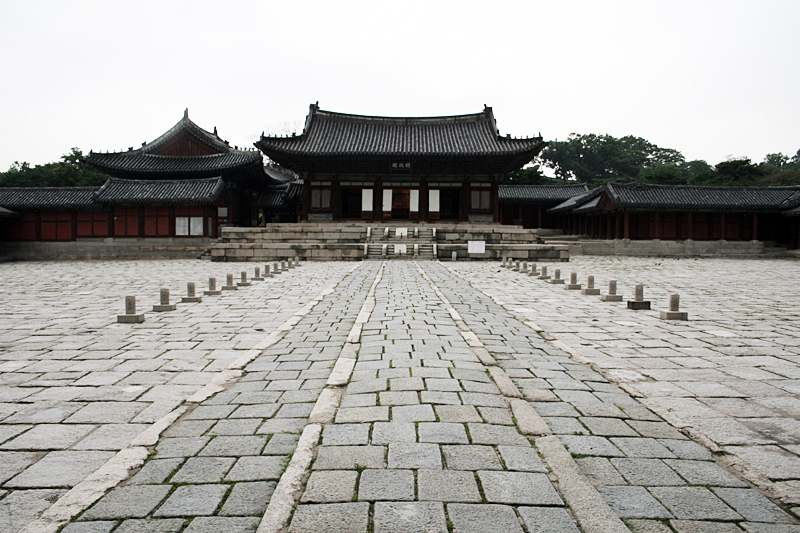 #814🏯 Architecture
Myeongjeongjeon Hall of Changgyeonggung Palace
보물 제814호
The main throne hall of Changgyeonggung Palace, notable for being the oldest surviving throne hall among the Joseon palaces. Unlike other palaces that face south, this hall faces east according to the palace's unique layout. It is a single-story wooden building that demonstrates the restrained architectural style of the 17th century.
🏺 CraftJagyeongnu (Original Water Clock by Jang Yeong-sil)
자격루 (원작)
The original self-striking water clock invented by Jang Yeong-sil in 1434 under the patronage of King Sejong. It automatically marked the hours by striking bells and drums using a system of bronze balls triggered by water flow — a remarkable feat of 15th-century mechanical engineering.