
김
김계승
2h ago
The Cultural Heritage Hidden in Korea's 10,000 Won Banknote
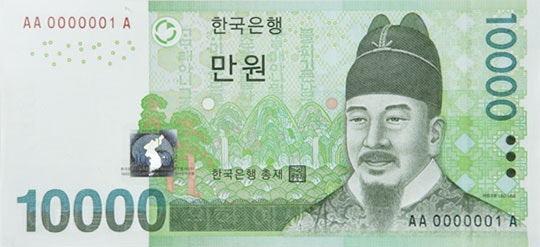
Korea's 10,000 won banknote features the portrait of Sejong the Great alongside several significant cultural treasures of the Joseon Dynasty.
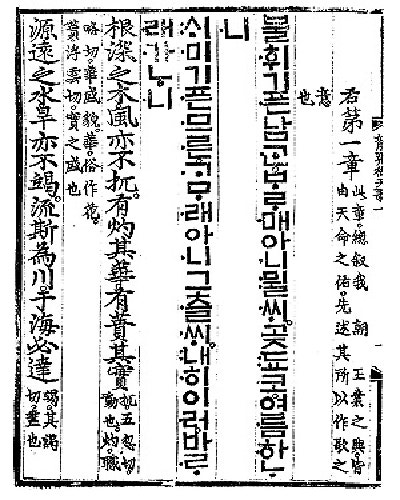
[Front] Yongbieocheonga (Songs of Flying Dragons)
Written one year before the promulgation of Hunminjeongeum, this is the earliest known text written in the Korean alphabet. The verse printed on the banknote is Chapter 2, composed entirely in pure Korean without any Chinese characters:
"A tree with deep roots does not sway in the wind, so its flowers are fair and its fruit abundant. Water from a deep spring does not cease in drought, so it forms a stream and flows to the sea."
This passage reflects Sejong's philosophy of constant self-reflection as a ruler.
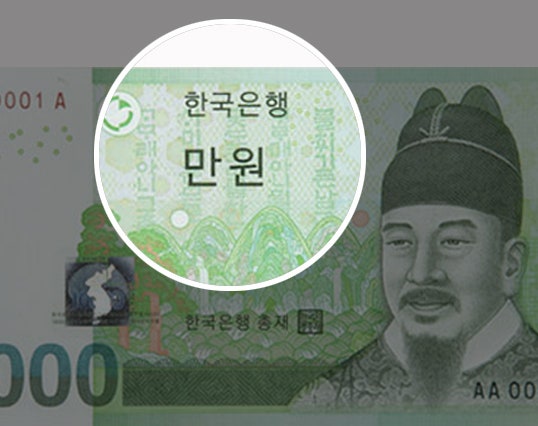
[Front] Irworobongdo (Sun, Moon and Five Peaks)
The painting depicts the sun, moon, and five mountain peaks, symbolizing the king, queen, and the nation. The five peaks also represent the five observable planets (Saturn, Jupiter, Mars, Venus, Mercury), connecting to the Confucian philosophy of Yin-Yang and Five Elements. This folding screen was placed exclusively behind the king's throne, symbolizing royal authority and the eternal continuity of the dynasty.
[Back] Honcheonui (Armillary Sphere)
Originally a Chinese celestial observation instrument, it was inaccurate for Korean skies. In 1433 (15th year of Sejong), Jang Yeong-sil and other scholars built a version calibrated to Korea's celestial coordinates. Solar eclipses were matters of great national importance - the royal court used instruments like this to predict them, demonstrating the state's control over astronomical phenomena.
[Back] Cheonsang Yeolcha Bunyajido (Star Chart)
Commissioned in 1395 by King Taejo to assert his heavenly mandate, this star chart features 1,467 stars across 365 degree markings. Star brightness is indicated by size, which remarkably aligns with modern astronomical magnitude scales. It is one of the oldest complete star charts in the world.
00